

TARI NALIENDELE
TARI Naliendele is one of the key research centers under the Tanzania Agricultural Research Institute (TARI), strategically located in the southern coastal belt of the Indian Ocean at 10°22′20″S, 40°10′34″E, about 111 meters above sea level in Mtwara Region. The area experiences its main rainfall season from December to May, with light scattered showers occurring between August and October. Despite its deep, well-drained but nutrient-poor sandy soils, the region provides a unique environment for research on cash oil crops and selected root crops. The center serves as the national coordinating center for research on cash oil crops, particularly cashew, sesame, and groundnut, while also conducting studies on cassava and sweet potato. The center’s mandate covers a wide range of disciplines including crop improvement, protection, agronomy, post-harvest management, and technology dissemination. A hallmark of the center’s innovation lies in cashew value addition, where research and processing initiatives have led to the production of diverse products such as cashew apple wine, cashew milk, cashew nut shell liquid (CNSL), cashew butter, flour, juice, and animal feed derived from by-products. Through these scientific and technological efforts, TARI Naliendele continues to drive agricultural transformation, promote industrial linkages, and enhance farmers’ livelihoods across Tanzania.
CASHEW RESEARCH IN TANZANIA
Background
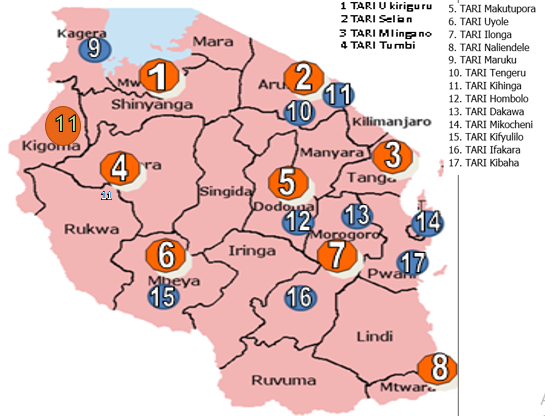
Cashew research in Tanzania started by collecting local and foreign cashew planting materials for germplasms establishment in the late 1940s after World War II in 1945. The research started at Nachingwea (10° 22’ 21.00’’ S, 38° 45’ 45.04’’ E and 427m above sea level. Thereafter expansion took place and most of the research activities were shifted to Mtwara and established at Naliendele Village (10° 22′ 20“S, 40° 10′ 34“E and 111 metres above mean sea level) located 10 Kilometres from Mtwara town. Evaluations which involved screening for agronomic traits continued to identify desirable and high performing genotypes. In 2016, Tanzania Agricultural Research Institute (TARI) was established under the Parliamentary Act No. 10 of 2016, whereby Naliendele is one of its 17 centres (see Map 1 below) mandated to conduct research on Cashew, Sesame and Groundnuts. The centre focuses on client-oriented research and cost-effective solutions in order to improve crop productivity and livelihood standards of people in the community. However, TARI which established to conduct, regulate, promote and coordinate all agricultural research activities in Mainland Tanzania, has currently 20 research centres.
The government of Tanzania included cashew in 13 national strategic crops. The government has been implementing its plans by empowering the cashew industry through; supporting research and extension services, provision of free or subsidized inputs to farmers, introduced a warehouse receipt system (WRS) and digitization of commodity trading through Tanzania Mercantile Exchange (TMX). All these strategies have led to enhancement and strengthening of cashew sector and attracted different stakeholders to invest in cashew industry. This witnessed by increase in cashew productivity from around 200,000 MT to an average of 510,000 MT.
CASHEW RESEARCH PROGRAME (CRP)
The program operates under the research and innovation, and technology transfer at TARI Naliendele to make sure that all developed and recommended technologies are properly and timely disseminated to clients. Naliendele Centre has nine (9) cashew development centres (CDC) located across all areas mainly growing cashew particularly the Southern, Eastern and Central zone of Tanzania to ensure research and technology transfer services are delivered efficiently.
Key responsibilities in research, service delivery and their achievements
Cashew Breeding
- Tanzania is the first country in Africa that has managed to develop, evaluate and formerly register new cashew varieties following procedures laid down by the International Union for the Protection of New Varieties of Plants (UPOV). The country has been considered as a major global producer and exporter, with its cashew varieties of high quality.
- A total of 62 cashew varieties included 16 Common varieties registered in 2006, 22 cashew Hybrids registered in 2015, 16 dwarf cashew registered in 2016, and 8 cashew varieties which are resistant to cashew leaf and nut blight disease namely TARIKO registered in 2024
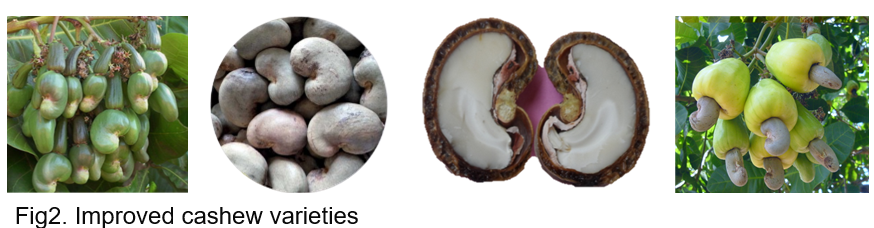
- The country developed a cashew descriptor for these varieties
- Developed cashew breeding techniques included grafting, tissue propagation (micropropagation). tissue culture d for mass propagation using cashew cotyledonary.
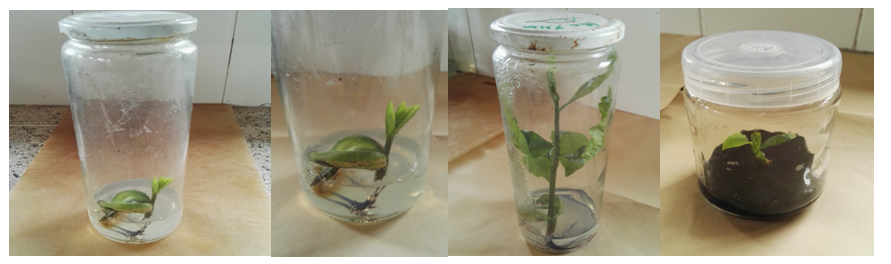
Tissue culture technique in cashew
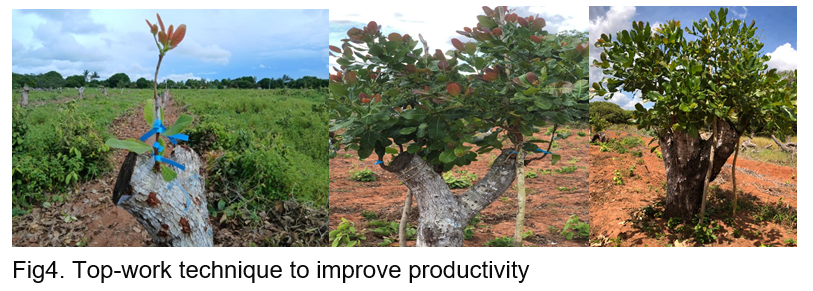
- Top-Working Techniques: To rehabilitate old and unproductive cashew trees. This has been achieved through a program called ‘Ondoa mapori, ongeza uzalishaji’. This has resulted to greater field rehabilitation method adopted by many farmers
- Established Polyclonal Seed Gardens (PSG) for seed production: The institute has the capacity of producing 100 MT of improved cashew seeds annually with the room for further expansion. These PSG are established in different areas across major cashew growing areas to ensure a close service delivery to our farmers. The seeds are harvested from orchards with a mixture of varied clones, to ensure high genetic diversity and sustainability in the field.
- The country through Naliendele centre exports seeds to other countries.
- Established nurseries for seedlings production and distribution
- Established scion gardens for production of planting materals
Cashew Agronomic practices
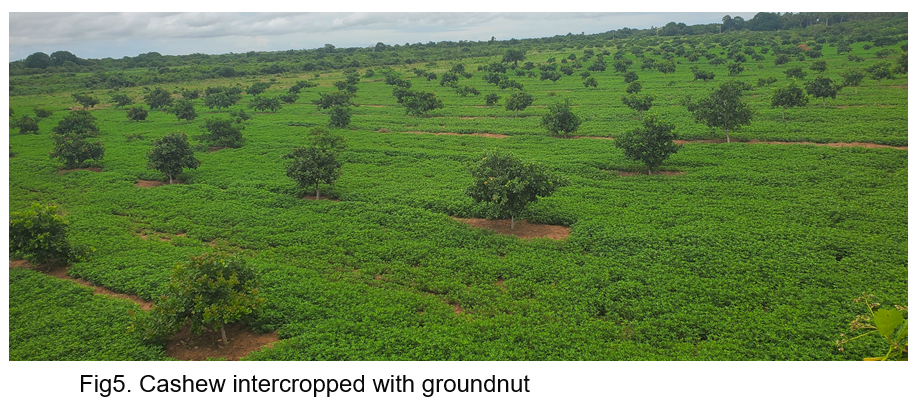
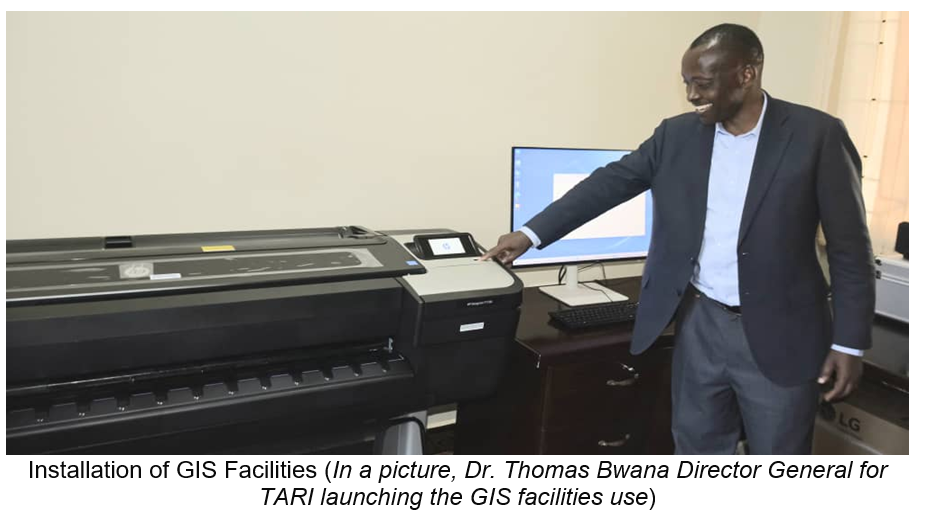
This involve general proper site selection (land suitability, soil management, Soil mapping), land preparation (clearing, layout, spacing and pitting), planting and refilling, orchard management ((intercropping, desuckering, pruning and canopy management, weed assessment and management approaches, and fertilizer application), It extends to simulation and modelling in agriculture, Agro-forestry, mechanization, Geographical Information System (GIS), and rejuvenation of old orchards (top working and coppicing).
Insect Pests and Disease Management
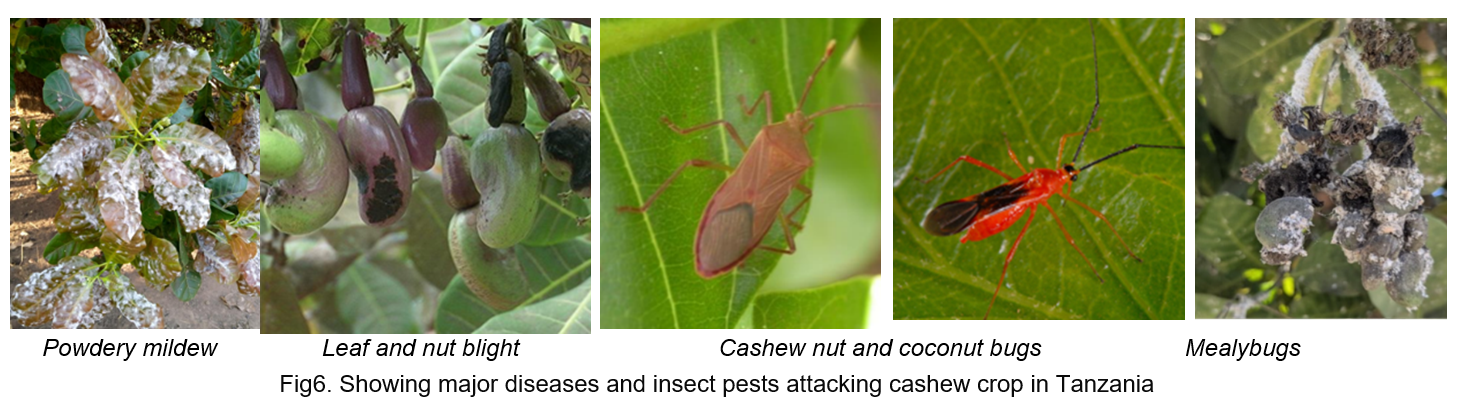
Cashew production in Tanzania faces significant challenges from pests and diseases, which can cause greater yield loss if not managed. The most devastating diseases include Powdery Mildew (Oidium anacardii), Cashew Leaf and Nut Blight (Cryptosporiopsis spp.), Anthracnose, and Fusarium wilt. Key insect pests are Helopeltis (Helopeltis spp.), Pseudotheraptus wayi (coconut bug), and mealybugs. However, significant efforts have been made through research and come up with management and control strategies to combat these pests and diseases of cashew. The key research focus has been much in monitoring the incidence of pests and diseases in all cashew growing areas, Identification of major pests and diseases affecting cashew, development of management and control strategies including cultural, biological, chemical control, Integrated Pest Management (IPM) methods, Semio-chemical tools, resistant varieties, and climate resilience strategies. The section dealing with pests and disease at TARI Naliendele is formalised as Crop protection section covering both entomological and pathological research aspect. The key success achieved is in the screening of cashew and release of two varieties resistant against the devastating cashew leaf and nut blight disease (CLNBD), developed one bio-fungicide against fusarium wilt disease, identification of new pests and pathogens, Disease epidemiology and forecasting, effective chemical control protocols, Integrated Management Approaches, and Surveillance of Insect Vectors.
Post-harvest Management Research
Cashew research at TARI Naliendele focuses heavily on enhancing productivity, improving cashew quality, and increasingly, developing protocols from value-addition and processing techniques. The key area for research is based on the following aspects.
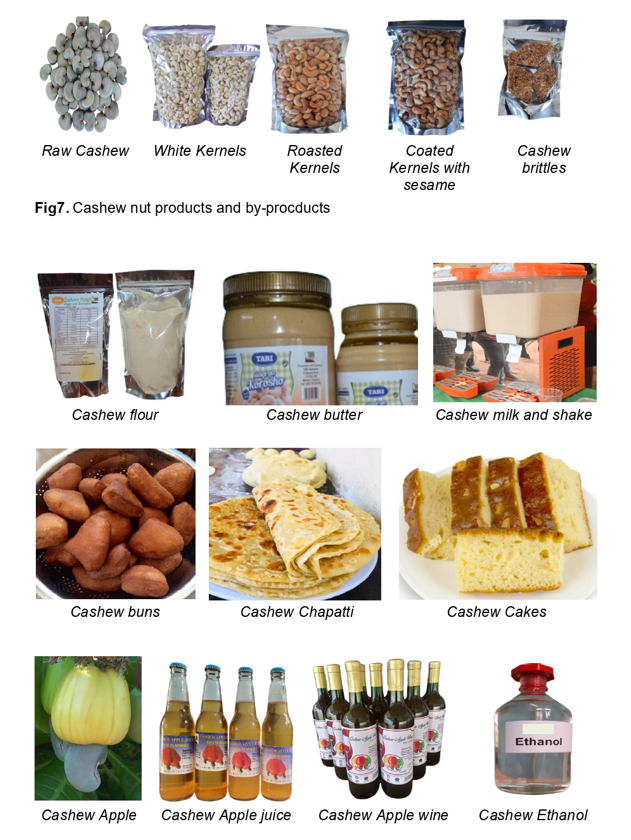
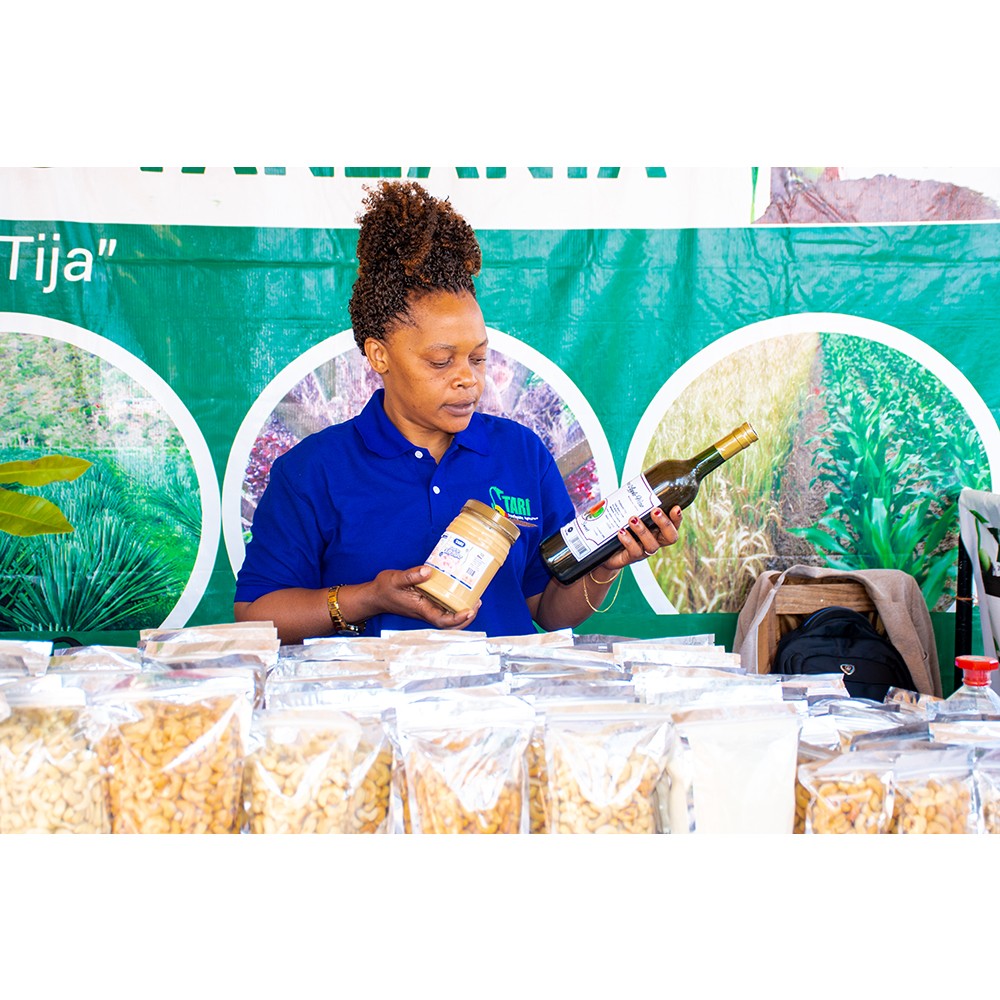
- Cashew nuts processing; Potential products being researched from nuts include high-value edible kernels (whole, splits, pieces) and significant by-products, including roasted/unroasted (white) cashew, oven dried cashew, spiced cashew, Cashew butter, Cashew flour (powder), Cashew milk and shakes, snacks (chapatti, brittle, chocolate, bans), developed protocols for mixed/composite flour, Cashew Nut Shell Liquid (CNSL) and cashew shell cake. The products and by-products developed are sold to different buyers and stakeholders.
- Cashew Apple Processing: Significant research is dedicated to the underutilized cashew apple, which often rots in fields. Potential products being researched include juice, wine, ethanol, jam, snacks, and dried cashew apple to reduce post-harvest losses and create new income streams.
- Small-Scale Processor Support: Research on small-scale processing has identified critical factors for increasing local value addition, including the need for better access to training on modern, hygienic processing techniques.
Socio-Economics and Marketing Research – (SEMR)
The primary role of Farming Systems and Socio- Economic Research is to institutionalize, coordinate, and develop an overall strategic framework for enhancing the efficiency and impact of agricultural research through the development of farmer-focused technologies. The key area for Socio-Economics and Marketing Research in Cashew includes;
- generating and providing market information and supply chain,
- preparing farm budgets,
- conducting impact and adoption studies,
- Classifying and analyzing client groups to enhance research targeting,
- Gender and Equality,
- Analysing consumer behaviour,
- Analysing institutional and policy-induced constraints to technology development at farm level, and
- Digital marketing strategies.
Cashew Technology Transfer
Transfer of appropriate cashew technologies and innovations aims to ensure that all researched technologies reach many farmers and various stakeholders. This is intended to improve the efficiency, productivity, and quality of cashew production and processing, ultimately increasing income for farmers and processors. Key initiatives to reach many farmers have been achieved through;
- Capacity building by organising and conducting trainings, farmer field days and establishment of demonstrations farms (method demonstration).
- Use of result demonstrations through organising, conducting and participating in agricultural shows, exhibitions and seed fair.
- Strengthen partnerships and collaborations with stakeholders through meetings, workshops, conferences/Symposia, seminars, and visitation
- Commercialisation and promotion of research technologies and innovations including iimproved planting material (seed and seedlings), value added products and good agronomic practices.
- Documenting and communicating agricultural technologies to farmers and the general public through group/mass media channels, mostly through audio (radio), audio-Visual (Television), printed media (booklets, leaflets, newspaper etc.), research publications, blogs and social media platforms, and short messages and phone calls.
The use of sports and games especially bonanza in the transfer of improved cashew technology has brought great success as it has largely brought about the participation of many young people to learn various technologies displayed to them before and during games
 |
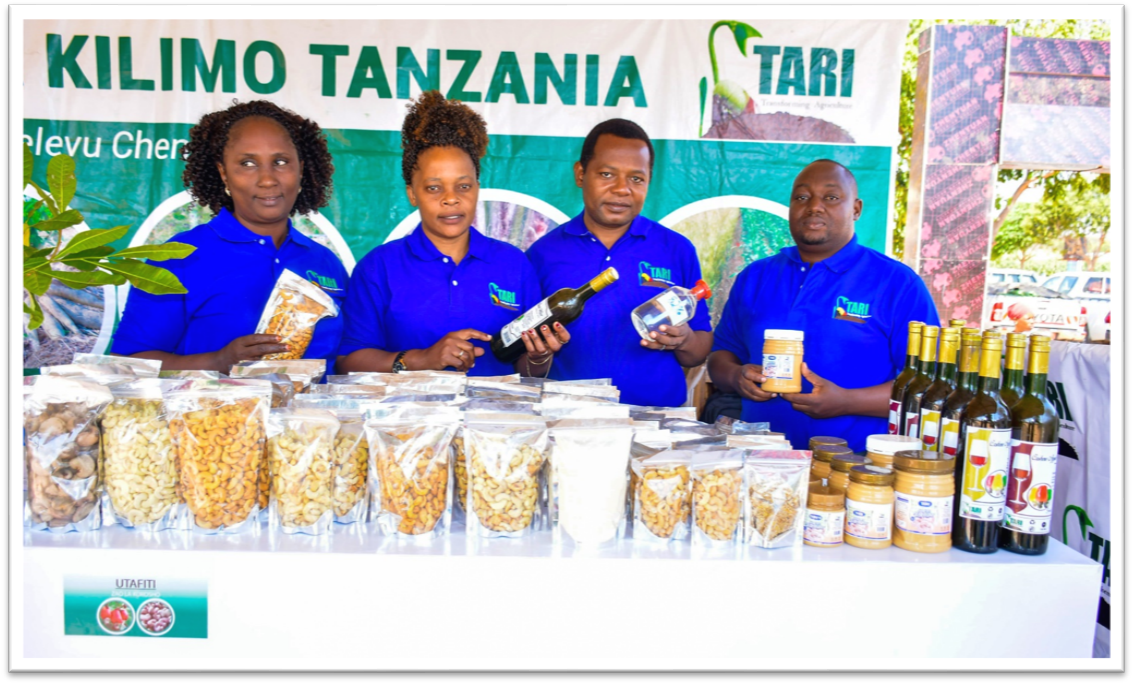 |
Promotion of Cashew products through exhibitions
Contact Us at TARI Head Office
Director General
Tanzania Agricultural Research Institute
Dodoma HQ Makutupora, Arusha Road,
P.O. Box 1571, DODOMA. Email: dg@tari.go.tz,
Tel: +255 (0) 26 296 1995 +255 (0) 26 296 1993
For Direct Tracking
Contact Us at TARI Naliendele
Centre Director
TARI – Naliendele,
10, Newala Road,
P.O. Box 509, MTWARA.
Email: cdnaliendele@tari.go.tz